If you have ever found yourself staring at your phone in the middle of nowhere wishing for just one bar of signal you are going to want to hear this story. A Texas based company called AST SpaceMobile is quietly and now very visibly reshaping what global connectivity could look like. With the successful launch of its newest satellite BlueBird 6 the company has taken a massive leap toward a future where your smartphone works almost anywhere on Earth no cell towers required.
BlueBird 6 is not just another satellite joining the crowd in low Earth orbit. It is a giant. In fact it is currently the largest commercial satellite circling our planet and it represents AST SpaceMobile’s boldest move yet in its ambition to build the world’s first space based cellular broadband network for everyday smartphones.
The Launch That Turned Heads
BlueBird 6 lifted off on December 23 aboard India’s powerful LVM3 rocket launching from the Satish Dhawan Space Center. The partnership itself is notable highlighting the increasingly global nature of the modern space industry. But what really caught attention was what the rocket was carrying.
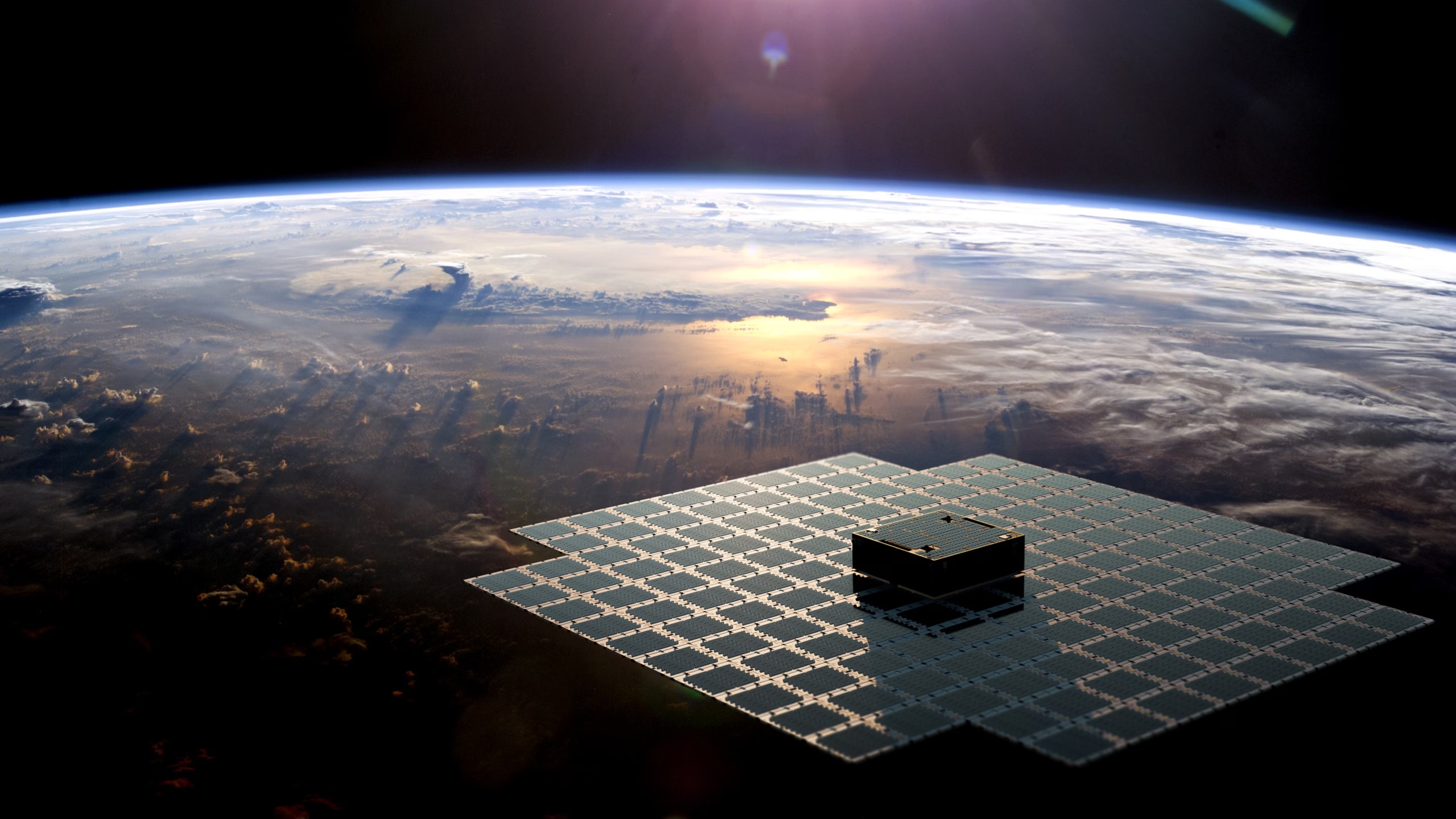
This next generation satellite is roughly three times larger than its predecessors a dramatic jump in size that reflects AST SpaceMobile’s confidence in its technology. Once fully deployed in orbit BlueBird 6 becomes a floating cellular tower in space one designed to talk directly to standard mobile phones not special satellite handsets.
For AST SpaceMobile this launch marks the first satellite of an entirely new generation. It is not just an incremental improvement it is a foundational step toward a much larger constellation that could eventually rival some of the biggest players in space.
A Vision That Started With a Single Satellite
To understand why BlueBird 6 matters so much it helps to look back at where this journey began. In September 2022 AST SpaceMobile launched BlueWalker 3 its first experimental satellite. That spacecraft was designed to prove a bold idea that a satellite could function like a cellphone tower in orbit and connect directly with everyday smartphones.
At the time many people were skeptical. The technical challenges were enormous. Phones are not designed to communicate with satellites hundreds of kilometers above Earth and the power bandwidth and precision required pushed the limits of existing technology.
Then came 2023. Using BlueWalker 3 AST SpaceMobile successfully completed the world’s first 5G phone call from space. That single moment transformed the company from an interesting startup into a serious contender in the future of global communications.
From BlueWalker to BlueBird
Following that breakthrough AST SpaceMobile began expanding its ambitions. The company launched a series of BlueBird satellites each one building on the lessons learned from BlueWalker 3. With every launch the satellites grew more capable more powerful and more refined.
BlueBird 6 is the culmination of those efforts so far. It is the sixth BlueBird satellite launched by the company but it stands apart from the rest. This version is designed to support up to 10 gigahertz of bandwidth and deliver mobile data speeds of around 120 megabytes per second. For context that is fast enough to handle video calls streaming and data heavy apps all from space.
This is not about emergency texting or limited satellite connectivity. The goal is full fledged 5G style service delivered directly to the phone already in your pocket.
Just How Big Is BlueBird 6
AST SpaceMobile has become known for building satellites with enormous deployable arrays and BlueBird 6 takes that reputation to a new level. Earlier BlueBird satellites featured arrays roughly the size of a tennis court measuring about 693 square feet or 64 square meters.
Once those arrays were fully unfurled in orbit something unexpected happened. The satellites became significantly brighter increasing in brightness by around two magnitudes. That made them outshine many other objects in the night sky drawing attention not just from engineers but from astronomers as well.
BlueBird 6 however makes those earlier designs look modest. When fully deployed its array spans approximately 2400 square feet or 223 square meters. That makes it the largest commercial satellite currently in orbit around Earth. It is a technological marvel but also an unmistakable presence in the sky.
Competing With a Space Giant
Any conversation about satellite internet inevitably leads to SpaceX and its Starlink constellation. With more than 9000 satellites already in orbit Starlink dominates the space based connectivity landscape through sheer numbers.
AST SpaceMobile is taking a very different approach. Instead of launching thousands of relatively small satellites it is betting on fewer much larger ones. Each BlueBird satellite is designed to cover a wider area potentially reducing the total number needed to provide meaningful global coverage.
That strategy could offer advantages in efficiency and cost over the long term. It also sets AST SpaceMobile apart as the only company focused specifically on connecting directly to standard smartphones without additional hardware.
Big Plans for 2026 and Beyond
If BlueBird 6 is the opening act the next few years are where the real show begins. AST SpaceMobile reportedly plans to launch between 45 and 60 additional satellites by the end of 2026. That expanded constellation would allow the company to begin offering 5G data services across the United States with coverage extending to other regions as well.
For rural communities disaster zones remote highways and underserved regions around the world this kind of connectivity could be transformative. The idea that a phone could work anywhere you can see the sky feels almost futuristic yet it is edging closer to reality with every launch.
Astronomers Raise Red Flags
Of course not everyone is celebrating. As satellites grow larger and more numerous astronomers have become increasingly concerned about their impact on the night sky. Bright satellite arrays can interfere with ground based telescopes streaking across images and contaminating data.
AST SpaceMobile’s satellites with their massive reflective surfaces have drawn particular scrutiny. The brightness observed from earlier BlueBird satellites already exceeded expectations and BlueBird 6’s even larger array has intensified those concerns.
These worries echo broader criticism that began when SpaceX started deploying thousands of Starlink satellites in 2019. While Starlink has made efforts to reduce reflectivity the cumulative effect of so many objects in orbit remains a major issue for the scientific community.
The Looming Risk of Orbital Congestion
Beyond brightness there is a deeper concern lurking in the background space debris. In a 2022 interview University of Regina astronomer Dr Samantha Lawler warned that we may be approaching a dangerous tipping point known as Kessler Syndrome.
This scenario occurs when collisions between objects in orbit create cascading debris triggering further collisions in a chain reaction. If that happens Earth’s orbital environment could become so cluttered that safe space operations would be severely limited for decades.
Dr Lawler described such a future as being inside a snow globe during dawn or dusk with debris constantly whizzing past. Cleaning up that kind of mess she suggested would be like trying to collect bullets in midair.
NASA has echoed similar concerns noting that dense satellite constellations could hinder efforts to detect potentially hazardous asteroids approaching Earth. When critical observation windows are blocked by artificial objects the consequences could extend far beyond astronomy.
Balancing Progress and Responsibility
There is no denying that AST SpaceMobile’s vision is compelling. Universal connectivity could bridge digital divides save lives during emergencies and unlock economic opportunities in places long left offline. At the same time the rapid expansion of satellites raises serious questions about sustainability in space.
The challenge now is balance. How do we embrace revolutionary technology without sacrificing the night sky or jeopardizing future space missions How do companies innovate responsibly in an environment that belongs in many ways to everyone
BlueBird 6 is a symbol of both promise and tension. It represents a future where space enhances daily life on Earth while also reminding us that progress comes with complex trade offs.
A New Era Taking Shape Above Us
As BlueBird 6 settles into orbit it is easy to forget just how quickly space technology is evolving. What once belonged to science fiction is becoming infrastructure quietly circling above our heads.
Whether AST SpaceMobile ultimately succeeds in rivaling SpaceX or carving out its own niche one thing is clear the race to connect the planet from space is accelerating. And with satellites like BlueBird 6 lighting up the sky that future is no longer distant it is already overhead unfolding one launch at a time.
Source: AST SpaceMobile