We have all been there. You open the fridge, pull out a piece of fish, and pause for a moment. It looks fine, It smells mostly fine. But there is still that tiny voice in your head asking the big question. Is this actually fresh enough to eat?
Whether you are cooking at home, running a restaurant kitchen, or buying seafood at a market, freshness matters. It affects taste, texture, and most importantly, safety. The problem is that judging fish freshness is not always straightforward. Our senses can help, but they are not foolproof. Lab tests exist, but they are slow, expensive, and impractical outside specialized facilities.
That is why a new microneedle based sensor developed by researchers in Australia is so exciting. It promises a clear yes or no answer about fish freshness in less than two minutes. No waiting, No guesswork, Just quick, objective results.
What Happens to Fish After It Dies
To understand why this sensor is such a big deal, it helps to know what happens to fish flesh after the fish dies. The changes begin almost immediately, long before any obvious signs of spoilage appear.
Inside the muscle tissue of fish are nucleic acids and other complex molecules that are essential for life. Once the fish dies, these molecules start to break down. This process triggers a chain of chemical reactions that gradually alter the composition of the flesh.
One of the key compounds formed during this breakdown is hypoxanthine, often abbreviated as HX. At first, the amount of hypoxanthine is very low. But as time passes, its concentration steadily increases.
This makes hypoxanthine an extremely useful indicator. The more HX present in the fish, the longer it has been since death, and the less fresh it is likely to be.
Why Hypoxanthine Is the Gold Standard for Freshness
For years, scientists and food safety experts have considered hypoxanthine levels to be one of the most reliable and objective measures of fish freshness. Unlike smell or appearance, HX concentration provides a quantifiable chemical signal that correlates closely with how fresh the fish really is.
In very fresh fish, hypoxanthine levels are low. As freshness declines, HX levels rise. By measuring this compound, it is possible to assess freshness in a way that is consistent and scientifically grounded.
The challenge has always been how to measure it quickly and conveniently.
The Problem With Traditional Testing Methods
Until now, testing for hypoxanthine has largely been the domain of laboratories. The process typically involves collecting samples, preparing them with chemical reagents, and analyzing them using specialized instruments. This takes time, trained personnel, and expensive equipment.
For a research lab or a large food testing facility, that might be fine. But for a restaurant, a fish market, or a home kitchen, it is simply not practical. You cannot wait hours or days for lab results when you need to decide right now whether a piece of fish is safe to serve or eat.
As a result, most people rely on subjective assessments. They look at the color. They feel the texture. They smell the fish. While these methods can be helpful, they are far from perfect. Early stages of spoilage are especially difficult to detect this way.
This is the gap the new microneedle sensor aims to fill.
Introducing the Microneedle Based Sensor
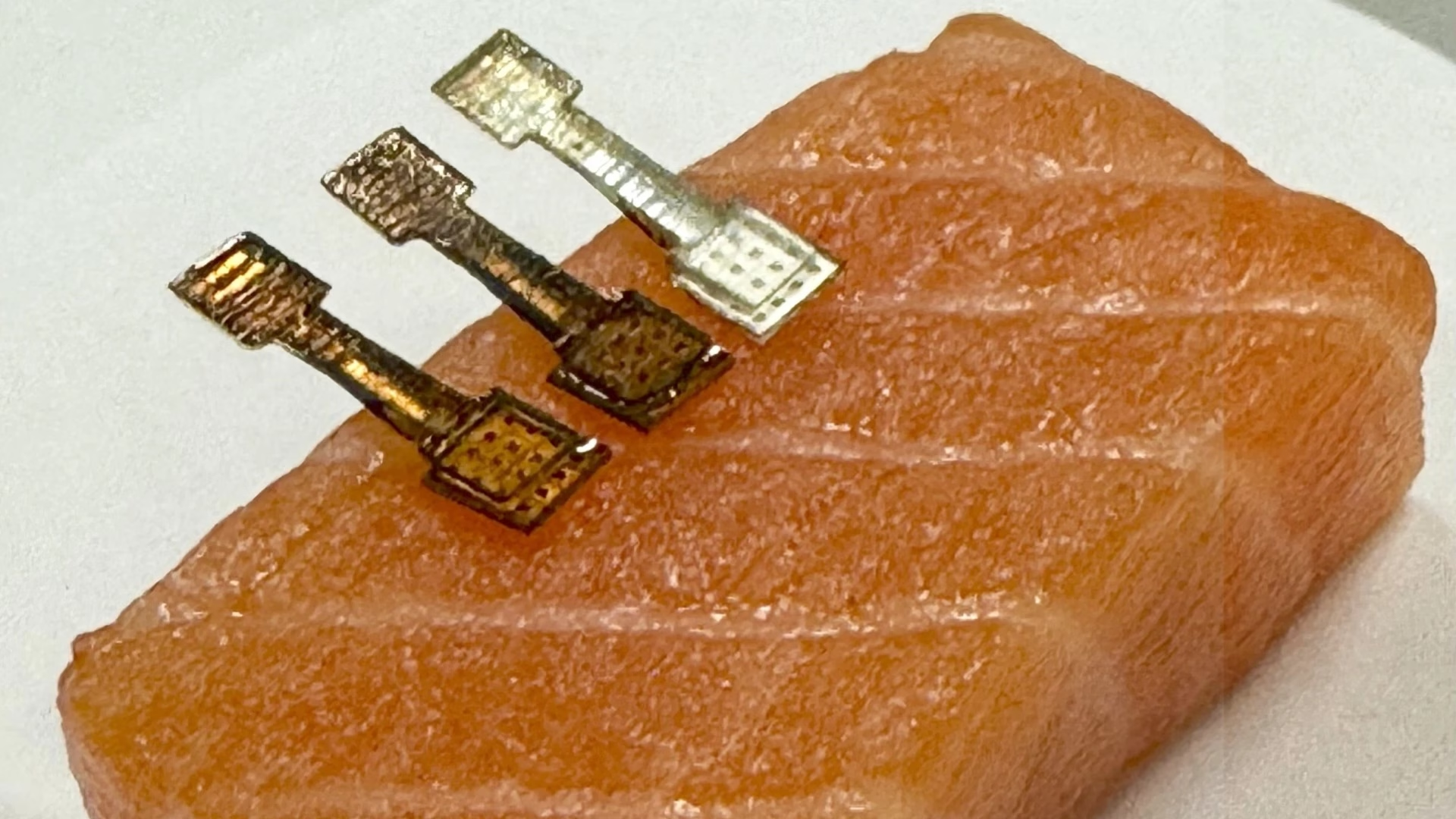
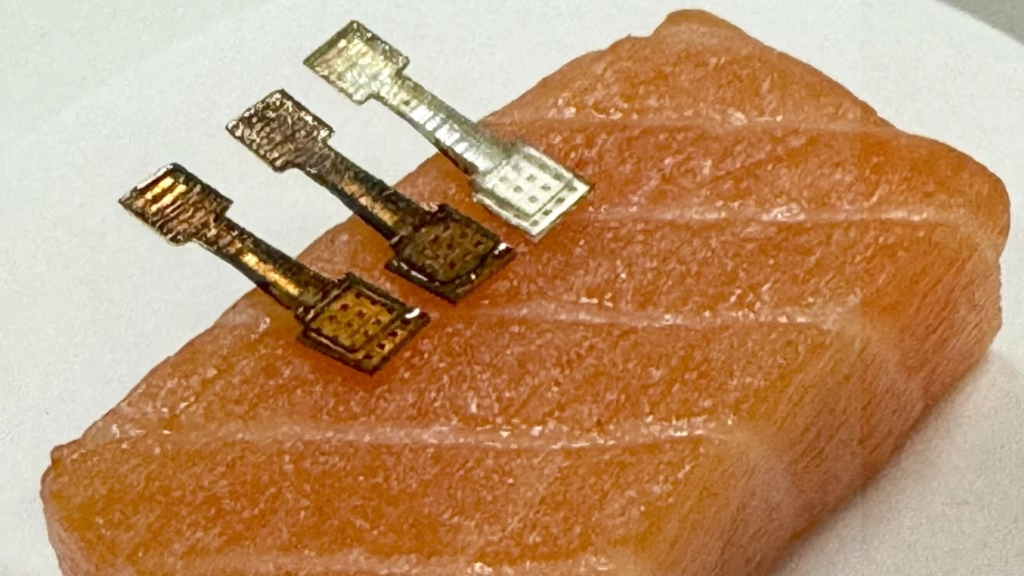
Researchers from Deakin University and Monash University in Australia have developed a small, portable sensor designed specifically to solve this problem. At first glance, it does not look particularly complex. But inside, it combines advanced materials science, biochemistry, and electronics.
At one end of the sensor is a tiny grid made up of sixteen microneedles arranged in a four by four pattern. Microneedles are exactly what they sound like. They are extremely small, sharp projections that can penetrate soft materials with minimal damage.
Microneedles have already been used in other fields, including medical applications where they deliver drugs through the top layers of the skin without causing pain. In this case, however, they serve a very different purpose.
How the Sensor Interacts With Fish Flesh
When the microneedles are pressed gently into a piece of fish, they penetrate just enough to interact with the tissue beneath the surface. Each needle is coated with a layer of gold nanoparticles and a specific enzyme called xanthine oxidase.
Xanthine oxidase plays a crucial role here. It is an enzyme that reacts with hypoxanthine, breaking it down in a predictable way. This reaction is not just chemical. It also produces a measurable electrical effect.
As the enzyme works on the hypoxanthine present in the fish flesh, it causes a change in the electrical potential of the surrounding tissue. In simple terms, the chemistry happening at the microneedles slightly alters the electrical properties of the fish.
The sensor detects this change and translates it into a reading that reflects the concentration of hypoxanthine. From there, it can determine how fresh the fish is.
Getting Results in Under Two Minutes
One of the most impressive aspects of this technology is its speed. According to the researchers, the sensor can deliver results in under 100 seconds. That is less than two minutes from the moment the microneedles touch the fish.
This kind of rapid feedback is exactly what is needed in real world settings. A chef can test a fillet just before cooking. A seafood vendor can check stock on the spot. Even a home cook could, in theory, use the device to make a quick decision before dinner.
There is no need for sample preparation, no waiting for lab analysis, and no complex procedures. The sensor does the work almost instantly.
Testing the Technology on Salmon
To see how well the sensor performed, the research team tested it on pieces of salmon. These samples were left at room temperature for varying lengths of time, ranging from fresh to up to 48 hours after death.
As expected, hypoxanthine levels increased steadily as the salmon aged. The microneedle sensor was able to detect HX concentrations as low as less than 500 parts per billion. That level is considered indicative of very fresh fish.
Even more importantly, the sensor’s readings closely matched those obtained using a commercially available laboratory testing kit. This shows that the portable device is not just fast, but also accurate.
Why This Matters for Food Safety and Quality
The potential impact of this technology is significant. Foodborne illness is a major global concern, and seafood is particularly sensitive to spoilage. Being able to quickly and objectively assess freshness could reduce waste, improve safety, and increase consumer confidence.
For the seafood industry, this could mean better quality control at every stage of the supply chain. From fishing boats to processing facilities to retail counters, freshness could be monitored more precisely than ever before.
For restaurants, it offers peace of mind. Instead of relying solely on experience and intuition, chefs could back up their decisions with real data. For consumers, it could eventually lead to smarter tools that make home cooking safer and less stressful.
A Glimpse Into the Future of Smart Food Sensors
While this microneedle sensor is still a research project, it points toward a future where food quality can be assessed quickly and scientifically, without specialized labs. Similar technologies could one day be adapted for meat, dairy, or even produce.
Imagine a world where checking freshness is as easy as using a thermometer. A quick test, a clear result, and confidence in what you are about to eat.
For now, this new sensor represents an important step in that direction. It shows that with the right combination of biology and technology, even something as subtle as fish freshness can be measured in minutes.
Final Thoughts
Fresh fish has always been prized, but knowing exactly how fresh it is has never been easy. This new microneedle based sensor changes that equation. By detecting hypoxanthine quickly and accurately, it offers a practical solution to a long standing problem.
While it may be some time before devices like this are widely available, the concept is promising. Faster testing, better decisions, and safer food are goals worth pursuing.
The next time you hesitate over a piece of fish, wondering if it is still good, remember that science is working on an answer that takes less than two minutes.
Source: American Chemical Society